Mother Nature
The Fine Print A Seeing Across Time Special Edition Series
My dad's neighbor posted photos after the first storm and called it a silent tornado. Looking at the pictures, you understood immediately why. The damage had that quality, the kind that arrives without warning and leaves without explanation, and that you spend the next several days simply walking through, trying to account for.
There were two of them, back to back, in the first week of April. Not wind alone. Ice. And a lot of it.
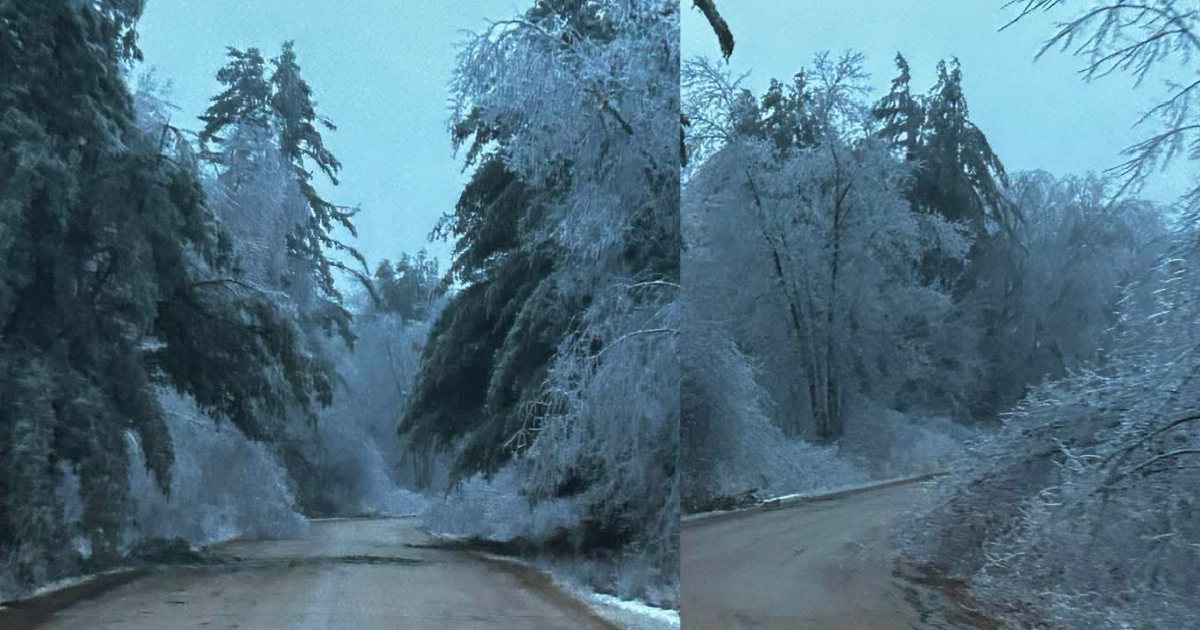
My dad has farmed that land in central Wisconsin for the better part of eighty years. He had never seen anything like it. Not once. Ice in Wisconsin is a fact of winter. It belongs on the pond, on the roads, in the low places where cold air settles and water collects. It does not belong on the tree limbs in April, and it has not, in his eight decades of watching that land, ever arrived the way it arrived this spring. The wind came with it, as it always does. What was different was the ice, the timing, and the weight of what it took down.
My grandfather planted two sugar maples in the front yard more than seventy years ago. My sister planted two more about thirty years ago. Four trees, two generations of planting, a collective root system that has survived every winter Wisconsin has delivered across a span of living memory. The April ice took limbs from all of them. Not the January cold. Not the almost thirty inches of snow in a single storm in March. April ice, twice in a row, arriving on trees that had already begun to wake up for spring and catching them unprepared for what winter had saved for last.
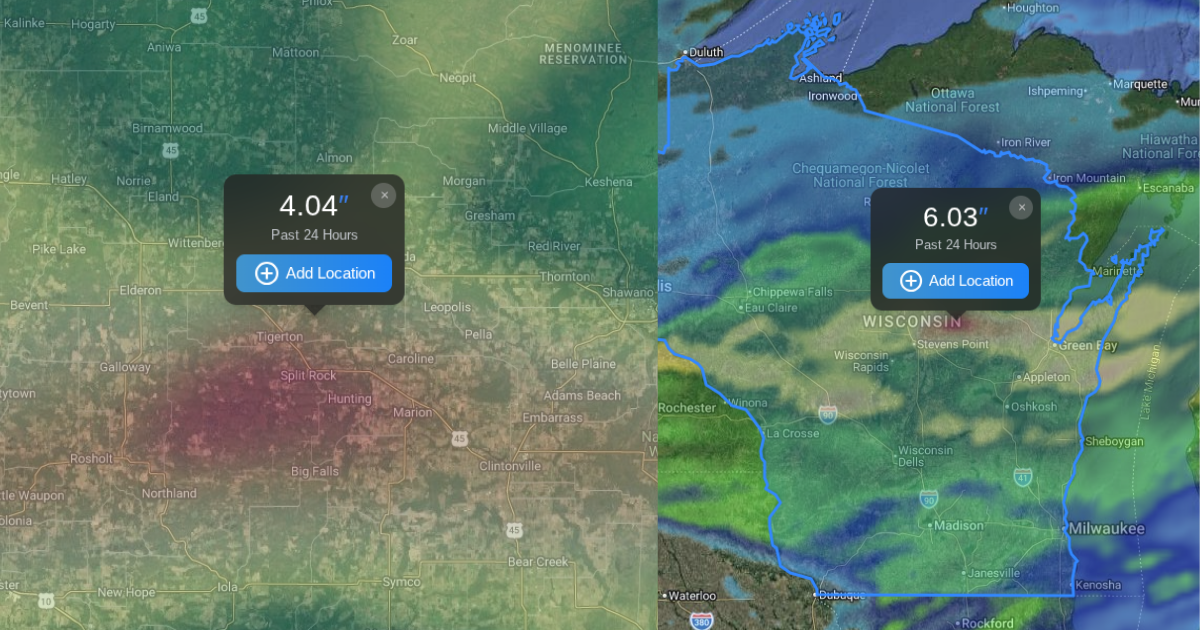
Less than two weeks later, that same area received between four and six inches of rain in under twenty-four hours. Modern technology let me drop a pin on our farm and see that our land was on the four-inch end of the downpour. The area that got six inches was less than ten minutes away. In the days since, entire communities in central Wisconsin have been evacuated due to rising waters and the risk of catastrophic flooding.
I have been sitting with all of that alongside something I have been reading about out west. I lived in Denver for seven years before moving to Iowa, and in Phoenix before that, so I still pay attention to what's happening in that part of the country. The Rocky Mountain snowpack feeds the Colorado River system, supplies water to seven states and about thirty tribal nations, and supports the agriculture that helps feed much of the country. Statewide snowpack in Colorado is sitting at around a quarter of its recent thirty‑year average. Lake Powell is only about a quarter full. The seven states that share the river’s water still haven’t agreed on how to divide a shrinking supply, and they now face the prospect of federal intervention and, potentially, court battles. Federal forecasters expect this year’s runoff into Powell to be well below normal, on the order of a third to roughly half of average, and water managers in Arizona have warned communities that they can no longer rely on the Colorado River the way they once did.
Too much water in central Wisconsin. Not enough in the American West. A farmer who had never seen April ice arrive twice in a row, and a river system built on a century of assumptions that the hydrology no longer supports.
This is not a weather story.
Weather is what happens on Tuesday. What is happening now operates across a longer span of time, the kind a farmer reads in the land rather than in a forecast, the kind that shows up first in the things that have always held and are now, quietly, beginning not to. The sugar maples survived decades of Wisconsin winters. The Colorado River Compact was written in 1922 during an anomalously wet period and has been overallocated ever since. Both are expressions of an assumption about what the environment would continue to provide. Both are now in the process of revision.
What this series examines is what that revision means. Not as an environmental story, though the environment is where it begins, but as a structural economic and geographic story about where Americans live, why they live there, and whether the conditions that made those choices rational still obtain.
The threads run in several directions at once, but they share a common origin. There is the water first, and the century-old legal architecture built to distribute it across a region that is running dry, a compact written during an anomalously wet decade and overallocated from the beginning. Then fire tells a related story, one in which an insurance market has stopped repricing risk in certain geographies and begun withdrawing from them entirely, leaving behind state plans that were never designed to bear the weight now landing on them. Along the coastlines, the storm season has been delivering its own version of the same message in the form of premiums that have doubled in a decade and carriers that have quietly exited markets where the math no longer works. Underneath all of it sits a housing stock that most people have not thought about yet, a generation of rapid-build construction hitting its first major replacement cycle at precisely the moment when the cost to rebuild has inflated and the coverage to pay for it has contracted. What emerges from these threads, when you read them together rather than separately, is not a series of regional crises. It is a single structural question about the geography of American life, and where it is heading.
Seeing Across Time has been building a framework for reading large-scale historical patterns in real time, the generational, economic, communicative, and geopolitical forces that converge to reshape a moment while most people are still inside it. The Fine Print is a Special Edition running alongside that work. The systems essays teach you to read the analytical framework. This series shows you what the framework is reading when it looks at the ground beneath our feet. You don't need to be following both to follow either. But if you are, something becomes visible in the space between them that neither series alone can show you.
The land is telling us something. It has been for a while. The question is whether we are reading it at the right horizon.