coherence

a book taking shape - an inquiry into how lives are rebuilt - an invitation to share your story

the question beneath the work

What allows someone to rebuild after a life has been disrupted?

Two people can experience circumstances that appear remarkably similar from the outside. The same kind of loss. Comparable resources. Similar responsibilities. One begins to find their footing within a year. The other remains suspended much longer.

We often explain the difference through resilience. We assume one person was stronger, more adaptable, more optimistic, or more willing to move forward.

But that explanation is incomplete.

People do not rebuild through willpower alone. They rebuild within the conditions of an actual life. Their movement is shaped by what is available, what is required, who is present, what must be protected, and whether there is enough time, energy, money, safety, or support for the next step to become possible.

The question is not simply whether someone is ready to move.

It is whether their life can move with them.

why coherence

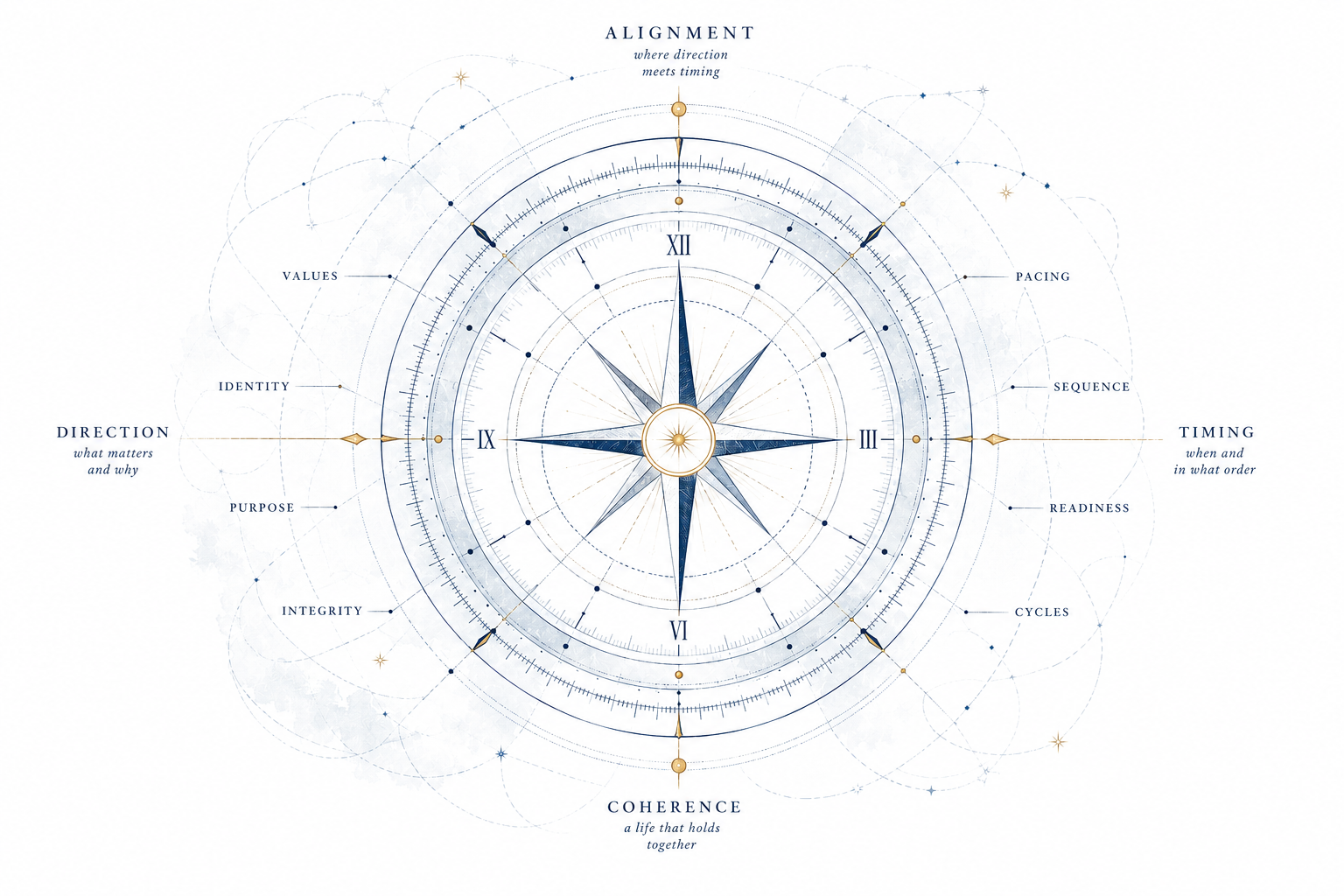
I use the word coherence to describe the relationship among the different parts of a life.

What someone believes. What they value. What they are responsible for. How they spend their time. The roles they occupy. The choices available to them. The future they are trying to create.

A coherent life is not a perfect life, nor is it a life without contradiction, uncertainty, or change. It is a life in which the pieces can belong together without requiring someone to continually abandon themselves in order to maintain it.

Rupture exposes the places where that alignment no longer exists.

Sometimes the rupture arrives from outside. A death, a divorce, an illness, a dismissal, a betrayal, or a sudden change in circumstances alters the structure of daily life.

Sometimes it begins internally. A person realizes that the identity, institution, relationship, or definition of success that once organized their life can no longer carry them forward.

Either way, rebuilding involves more than replacing what was lost. It requires the gradual creation of a life that can hold who the person has become.

what I am exploring

The research considers how people experience the period between rupture and renewed coherence.

I am especially interested in the order in which things become possible. What needs to stabilize first. What remains unavailable until something else changes. How people recognize that an old identity has ended. When agency begins to return. How support, structure, and circumstance accelerate or delay the process.

I am also studying the gap between internal readiness and external possibility.

A person may be emotionally ready to begin again but constrained by caregiving, finances, health, or institutional realities. Another may have the resources to make a change but still need time to understand what the experience meant. Neither is failing. They are moving through different temporal and structural conditions.

The goal is not to create a universal formula for recovery.

It is to develop better language for the patterns people are already living and a more honest way of understanding how rebuilding actually unfolds.

an invitation to participate

This research is being shaped through conversations with people who have experienced a meaningful disruption in their lives.

Participation involves one private video conversation, usually lasting about an hour and sometimes longer. There is nothing to prepare and no expertise is required. I will ask questions, listen carefully, and invite you to describe what happened in the way that feels most truthful to you.

I am interested not only in the version of the story that makes sense now, but also in what the experience felt like while you were living through it.

What could you see at the time?

What remained unclear?

What became possible first?

What had to wait?

What helped you move, and what held you in place longer than others may have understood?

Your identity will remain separate from the material you share. Your name will not appear in the book or in any related published work. Each participant will be assigned a code, and participation is voluntary throughout the process.

You do not need to have reached a tidy ending.

You do not need to describe the experience as a gift, a lesson, or the best thing that ever happened to you.

You only need to be willing to speak honestly about how your life changed and how you began, or are still beginning, to find your way forward.

where the work is going

This project will eventually become a book, but the larger inquiry extends beyond a single publication.

It is part of an evolving body of work about coherence, temporal architecture, and the ways that lives unfold across multiple horizons. It asks us to look beyond visible outcomes and consider the sequence, structure, and conditions beneath them.

Because the most important question after a rupture may not be how quickly someone moves forward.

It may be what must become possible for the next life to begin.

the architecture of rebuilding

Rebuilding does not happen all at once.

It happens in pieces, through stages that may overlap, repeat, or remain unfinished for a long time. One part of life may move forward while another stays rooted in what came before. External progress may arrive before internal understanding. A person may know exactly what they want but lack the capacity to pursue it. They may finally have freedom and discover that freedom has its own disorientation.

Sequence matters.

Timing matters.

So do the conditions surrounding each decision.

Some of those conditions are internal. Identity, confidence, grief, imagination, exhaustion, and the ability to envision a future that does not merely recreate the past.

Others are structural. Money, caregiving, health, geography, employment, institutional rules, social expectations, and the amount of margin available in daily life.

Relationships matter too. Someone may move because the right person appeared at the right moment, because a community created room for experimentation, or because one honest conversation made a previously invisible possibility easier to see.

What can look like personal strength from the outside may also contain support, timing, privilege, permission, preparation, or luck.

What can look like hesitation may be a rational response to conditions that have not yet made movement possible.

This work is an effort to understand those differences without reducing them to easy lessons about courage or mindset.

how to participate

If you feel drawn to participate, complete the form below and share a little about the experience you would like to discuss. I will be in touch personally to arrange a time for our conversation.