the patterns were always there…
I have spent a lifetime noticing patterns in people, in systems, and occasionally in myself.
Titles came and went, and entire eras passed. What stayed was a quieter question about what actually allows a life to hold together when the ground keeps moving beneath it.
The degrees built capacity. The credentials opened doors. Decades of public leadership taught me things no classroom could. But none of it, on its own, brought coherence. That came from something harder to name and considerably harder to earn.
I began to understand it as the thread between your values and your calendar, between what you say matters and how you actually spend an ordinary Tuesday. It lives in the distance between the version of yourself you project and the one still working things out, and in the choices that either draw those versions closer together or pull them farther apart.
I am not interested in hustle, noise, or action performed simply for its own sake. I am interested in what holds when everything else keeps changing, and in the quieter moments when we begin to recognize what belongs in the life we are building.
This is a living notebook and a public home for the ideas that continue to shape my work and my life. It is a place for ordinary moments, crossroads, and the recalibrations that matter more than we often admit while we are living through them.
If you are here, you are probably noticing them too.
latitude
Why do two equally capable people encounter the same opportunity and end up with completely different lives?
We like to believe timing is neutral. That an opportunity is an opportunity, whenever it happens to arrive. But a possibility never lands in empty space. It lands inside a life already full, already holding people and obligations it did not get to set down, and that life decides what the possibility costs. The same door, opened at the wrong moment, is a different door.
Latitude studies the moments where timing changed what a person could do. Where a chance came at the wrong time, or asked more than a life could give. It asks how much of a life is chosen, how much is handed down, and what it costs to live in the difference.
Some people are given a great deal of room. Some are given almost none. That difference is rarely named, and it shapes nearly everything.
seeing across time
The world is not becoming less predictable. It is becoming harder to read at the level where the real patterns live.
Most frameworks teach you to manage the event. Seeing Across Time teaches you to read the era, the slower current beneath the noise that decides what any given week was ever about.
The capacity to read at that depth is what I call temporal literacy. It can be learned, and this series is built to develop it.
Each essay works a different angle on the same transition, from what is shifting underneath us to what it asks of anyone trying to lead, decide, and build inside it. It is a living body of work, with a long horizon still ahead.


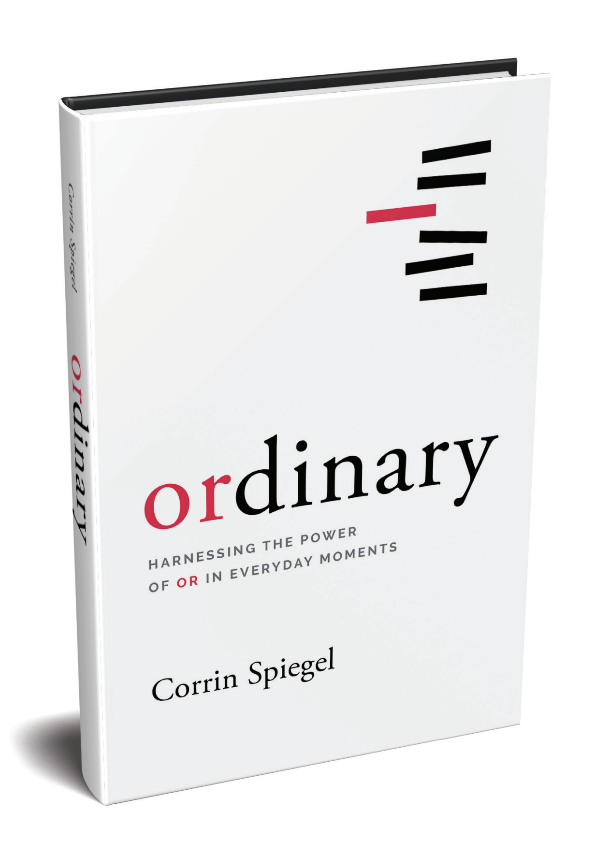
ordinary
The most powerful patterns are created in the most ordinary of moments.
Most of what shapes a life happens in moments we barely register. The breath before you respond. The quiet decision to push through or pause. None of these moments look like turning points. Which is precisely why they are.
Ordinary is a book about the hinge points hidden inside everyday life. The small automatic patterns that determine far more than we realize. Eighteen dualities. Eighteen quiet crossroads that appear dozens of times a day, most of them passing without a second thought.
The direction you move, often without noticing, determines the shape of your life far more than any extraordinary event ever will.
This is not a call to rebuild or optimize. It is an invitation to pay closer attention to the life you are already living, and to reclaim the agency that has always been available to you.


coherence
Why does a life so rarely come back together in the order we would choose?
When a life comes apart, we tend to measure the recovery by speed, by how quickly someone gets back on their feet. But a life does not reassemble on command. It comes back together on its own schedule, in an order set less by what a person wants than by what their circumstances will allow. Readiness is not the same as room.
Coherence studies that order. What has to steady before anything else can move, and why a person can be ready for change long before their life is ready to hold it.
The question after a rupture may not be how quickly someone moves forward. It may be whether their life can move with them.