
the long view
The Fourth Turning Is Here, Neil Howe
Howe's argument is that Anglo-American history moves in predictable eighty to one hundred year cycles, each composed of four distinct seasons. We are currently in the Fourth Turning, the crisis season, and Howe wrote this update to show exactly where we are inside it. Whether you find the framework convincing or uncomfortable, it is impossible to read this book and look at the current moment the same way.
The Perennials, Mauro F. Guillén
Guillén challenges one of the most deeply held assumptions in modern life. That age and stage are the same thing. They are not. As demographics shift and lifespans extend, the old sequential model of education, work, and retirement is quietly becoming obsolete. This book makes the case for what replaces it.
Sapiens, Yuval Noah Harari
Before you can understand where we are going, it helps to understand how we got here. Harari traces the full arc of human history, from the cognitive revolution to the agricultural revolution to the present, and asks a question most history books never do. How did one unremarkable primate end up running the planet? The answer is more unsettling and more illuminating than you might expect.
Generations, Jean M. Twenge
Where Howe looks at cycles, Twenge looks at cohorts. She brings decades of psychological research to the question of what actually separates one generation from the next, and her findings are more nuanced and more unsettling than the usual generational shorthand. Less about who millennials are and more about what the conditions that shaped them reveal about where we are headed.
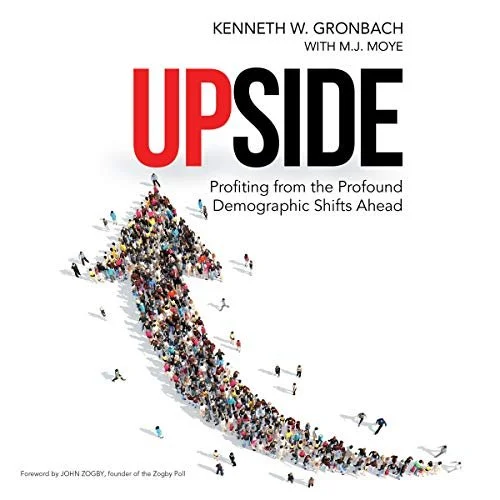
Upside, Kenneth W. Gronbach
Gronbach reads demographic data the way others read a balance sheet. Methodical, forward looking, and specific. Where most trend books trade in anxiety, this one trades in pattern recognition. The argument is that the next several decades are more predictable than they feel, if you know where to look.
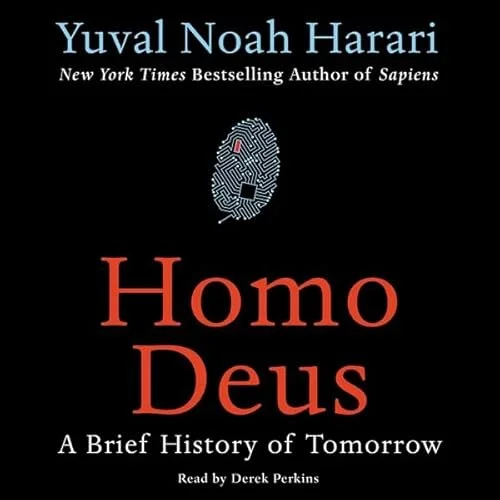
Homo Deus, Yuval Noah Harari
Where Sapiens looked backward at how we became who we are, Homo Deus looks forward at what we are becoming. Harari is not making predictions. He is mapping the logic of where current trajectories lead if nothing interrupts them. It is a book that rewards slow reading and resists easy conclusions.
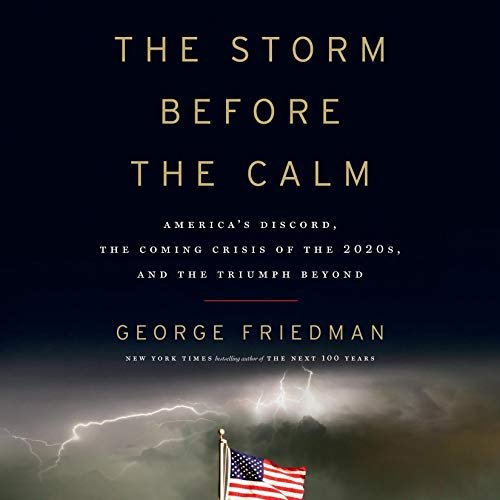
The Storm Before the Calm, George Friedman
Friedman argues that America operates on two overlapping cycles, an institutional cycle and a socioeconomic cycle, and that they are converging right now into a period of significant disruption followed by renewal. Where Fourth Turning gives you the generational lens, Friedman gives you the structural one. Together they make the current moment considerably harder to dismiss as noise.
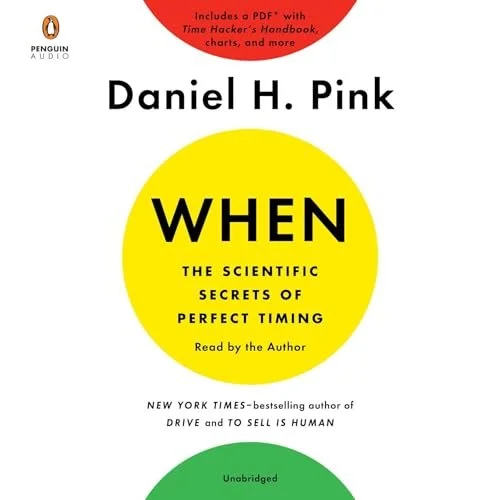
When, Daniel H. Pink
Pink applies behavioral science to the question most of us never think to ask. Not just what to do, but when to do it. The research on timing, sequencing, and the hidden architecture of the day is both practical and quietly profound. It belongs on this shelf because it brings the long view all the way down to the scale of a single Tuesday.
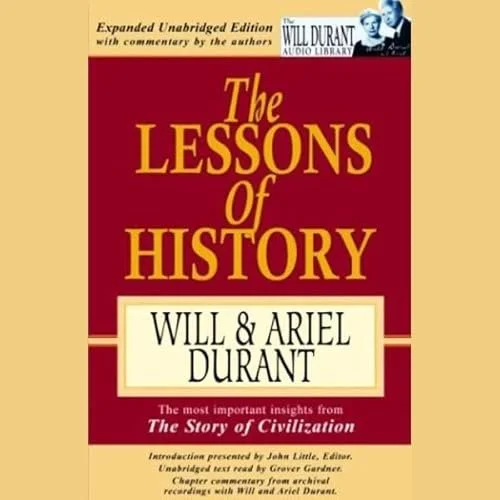
The Lessons of History, Will and Ariel Durant
Short enough to read in an afternoon. Dense enough to take a lifetime to absorb. The Durants distilled decades of historical scholarship into a single slim volume asking what history actually teaches us about human nature, power, morality, and change. It is the kind of book you return to at different seasons of your life and find something different every time.